

Foreclosure Defense: Exposing Mortgage Fraud
Foreclosure Defense, Mortgage Fraud, Homeowner Empowerment
The Deed of Repentance: A “Little Short” for Homeowners Trapped in Mortgage Fraud
This article explains, in plain language, a structured five‑month Deed of Repentance process that homeowners can use to expose fraud, demand clarity, and reclaim a measure of power in the face of modern mortgage and foreclosure practices.
Why This Is Called the “Little Short”
Anyone who has seen The Big Short understands that film is more than entertainment — it is essentially a confession. It illustrates how deeply corrupt and unaccountable the mortgage world became, and how almost nobody was truly keeping track of the financial instruments being created and traded on people’s homes, neighborhoods, and lives. The central characters were not simply “lucky”; they created a new instrument, saw through the game, and then everyone else scrambled to copy them.
The Deed of Repentance can be understood in a similar way: as a shorting (clarifying) instrument — but not for Wall Street. It is for the homeowner. Instead of a “Big Short,” this process functions as a Little Short. It is not about betting against the housing market; it is about calling out fraud, confusion, and dishonor buried inside mortgage paperwork and demanding clarity on the actual title to real property. This is where homeowner empowerment lives — in the details that were never clearly explained, largely because it has never been in the industry’s interest to do so.
Public vs. Private: The Two Worlds Your Mortgage Lives In
A core idea behind the Deed of Repentance is that there is a public side and a private side to almost everything related to a mortgage and property. This is not just a legal technicality — it represents two different worlds interacting every time something is signed, recorded, or taken into court. There is the promissory note, the deed of trust or mortgage, the security assignment, the title, the abstract, the recorded documents — and then there is what actually happened between living, breathing human beings when a “loan” was obtained for a home.
Many people assume, “We have regulators. We have the SEC. We have enforcement. We’ve seen The Wolf of Wall Street; surely someone is cracking down.” Returning to The Big Short reveals a different reality: there are massive incentives to keep this system alive, even when it is built on fraud and confusion. In practice, almost nobody steps in to uphold real standards on behalf of the homeowner.
In this environment, the burden effectively lands on the homeowner. The homeowner is the one holding the liability, the one who is not allowed to be “ignorant of the law,” even while the system allows judicial officers to operate with what has been called “reasonable ignorance” — a posture that Heinz vs North Carolina helped normalize for themselves. Courts and officials may be permitted to be ignorant; homeowners are not. That imbalance is worth serious reflection!

Real power starts with organized records, proper notices, and documented standards.
What the Deed of Repentance Actually Is
The Deed of Repentance (DoR) is a structured, five‑month private administrative process. It is not a magic letter or a one‑page template downloaded from the internet. Instead, it is a series of correspondences sent with precision and accountability, using tools that have always existed: neighbors as witnesses, a notary, and the United States Postal Service (USPS).
The approach draws inspiration from the work of Cal Washington and the InPowerMovement, particularly their use of Notices of Liability. That general framework is adapted here specifically to mortgages and real property. In essence, the Deed of Repentance is a notification and contract structure in which the homeowner, as the true owner and “lord of the land,” communicates: “If there is fraud or confusion in this mortgage, I require clarity. If you remain silent, that silence will have consequences(peaceful private remedy).”
💡 Homeowner Mindset Shift: In practice, no one in the system carries the ultimate liability for a home except the homeowner — not the realtor, not the title company, not the bank’s attorney, not even a judge(mediator) or sheriff. Once that reality is understood, homeowners can stop waiting to be rescued and begin acting as the actual owners, the lords of the land.
The 5-Step Deed of Repentance Process for Homeowners
The Deed of Repentance can be understood as a five‑step, five‑month private remedy that runs alongside — and often underneath — whatever is happening publicly with a mortgage or foreclosure. The basic practical requirements are simple: two witnesses, a notary, and USPS. The goal is to build a documented trail of honor and accountability while offering a private and openable remedy to the liabilities discovered along the way, instead of public ones that may end up in an non erasable record along with liberty/criminal charges NOT open to discussion(contract).
Step 1: The Deed of Repentance Letter (Day 0–14)
The first step is the core Deed of Repentance letter. This is a notification and repentance document that begins with an uncommon but powerful move: the homeowner acknowledges their own prior confusion. The letter recognizes that, at the time of signing the original mortgage, the homeowner may not have fully understood the instruments involved — the separation between the promissory note and the deed of trust, the security assignments, or how the currency systems actually operate.
In this document, the homeowner asks for forgiveness and clarity, but does so inside a contract structure with built‑in accountability. The letter makes specific requests, such as: production of the original wet‑ink notes, a full accounting, and clear evidence of who actually holds the liability and the right to enforce. It references relevant laws and the legal distinction between the note and the security instrument, aiming to establish a genuine meeting of the minds, which is required for any valid contract.
This Deed of Repentance letter is then sent via USPS certified mail, with witnesses and notary involvement where appropriate, and the recipient is given 14 days to respond in honor.
Step 2: Notice to Respond to the DOR (Day 14–28)
If, after those first 14 days, there is no response or an improper response — for example, a reply that dodges the questions, refuses to supply the requested documents, or ignores the accountability structure (being contempt)— the process moves to Step 2: a formal Notice of Sin tied back to the original Deed of Repentance.
This notice essentially states: “You have been given a fair opportunity to clarify this liability. Your silence or dishonor is now being formally noted. The private administrative remedy outlined in the Deed of Repentance is moving forward.” The notice focuses on full accountability, making it clear that the parties involved will not quietly escape their obligations.
Again, the notice is grounded in law and contract. It may remind the recipient that, although Heinz vs North Carolina allows judicial officers a degree of “reasonable ignorance,” the homeowner does not have that luxury and now neither do they. The law is placed squarely in front of all parties so everyone understands what is at stake. A new 14‑day clock begins as soon as this notice enters the recipient’s world, to allow further honorable due diligence to the respondants.
Step 3: Reproof of Sin (Around Day 30)
After roughly 30 days from the original Deed of Repentance, if silence or dishonor continues, the next step is a document often called the Reproof of Sin. The phrase is strong, but accurate: it formally records that, for approximately 30 days, the homeowner has honorably and peacefully attempted to obtain clarity on the liability tied to the property, and that the other party has chosen not to respond, or has responded in dishonor and now agrees through silent tacit agreement to the peaceful private remedy openly discussed over a bonafide meeting of minds, due to the help of witness's and USPS.
The Reproof of Sin restates the entire timeline, the documents sent, the specific failures to respond, and the obligations/judgements that are being avoided. It reinforces the mechanics that liability is a form of currency. When a party refuses to clarify who holds which liability, they are effectively playing games with the very currency they claim to manage, yet now they are bound into one that they know you now are aware to the true standards to.
Step 4: The Real True Bill – Your Private Invoice (Day 30–90)
At the same time the Reproof of Sin is sent, the homeowner issues what is called the Real True Bill. This is a private bill of exchange — an invoice/debt/lien that reflects the fraud, iniquities, confusion, and dishonor documented throughout the Deed of Repentance process. It is not merely a complaint; it is a monetized claim, a private and peaceful remedy for the harm caused by the other party’s actions and omissions.
In the public financial world, a bill that goes unpaid for 90 days generally goes into default. The Real True Bill applies the same principle in the private realm. After 90 days without a proper response or settlement, that private bill of exchange becomes bona fide — a collectible claim against the respondent and by any holder of the bill (just like "cash" or a blank money order). If the bill is paid, responded to, or settled, that outcome is effectively cash. If it is ignored, the default itself becomes part of the homeowner’s remedy too. They now get to use/circulate the new currency they LITERALLY printed (just how all other paper United State Dollar, USD, currencies are).
Either way, as long as the homeowner maintains clean books and full accountability, they begin to operate more like a bank: creating and managing private currency tied to the underlying liability. Some might even say they are also starting to operate like or even better then a public court does/can.
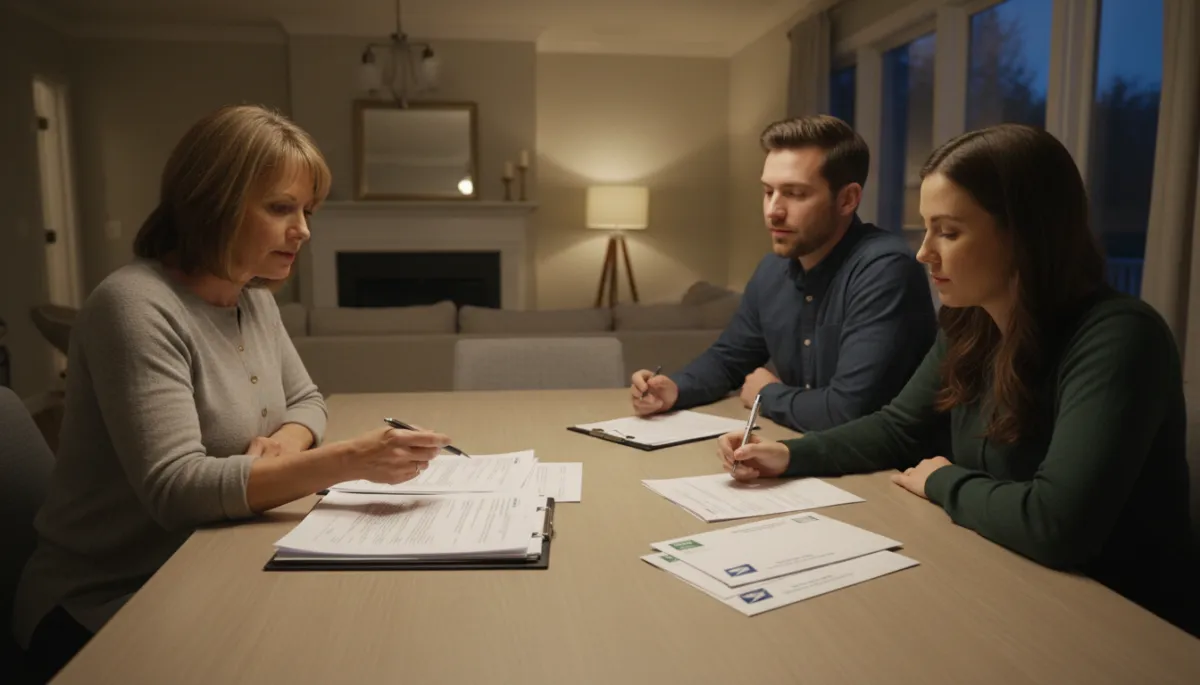
Witnesses, notaries, and USPS turn your private process into enforceable evidence(debts).
Step 5: From Private Remedy to Public Enforcement (After Day 90)
Once the Real True Bill has remained in default for 90 days, the homeowner holds a completed private administrative record/lien against the respondents. The Reproof of Sin, the Deed of Repentance, the formal Notice of Sin, the timelines, USPS proofs of mailing, the witness's, and notarial evidence together form what can be viewed as an “anti‑mortgage bond certificate” — a counter‑instrument to the questionable mortgage structure originally attached to the property.
At this stage, the homeowner has options. The instrument can be moved publicly or privately, and that choice matters. Once something is fully taken into the public, it can be difficult to pull it back into the private. However, by understanding the notarial process of dishonor — the public system’s version of a debts final notice of default — a homeowner can hand the private record summary to the public side in a way that compels public enforcement based on the privately structured record. This is where the worlds of public and private finally intersect in the homeowner’s favor, instead of simply steamrolling them.
💡 Homeowner Caution: It is also important to recognize that when a homeowner starts operating in honor and demanding clarity, there may be “gnashing of teeth” in local public systems and among their water‑cooler circles — resistance, gossip, and pushback — until enough learning and correction occurs for those systems to return to truth and understanding. That turbulence does not necessarily mean the homeowner is wrong; it often signals that a long‑standing passive role is finally being abandoned.
Why This Matters for Almost Every Homeowner
Many researchers and practitioners conclude, based on years of observation, that 90–99% of modern mortgages are fraudulently structured. The separation of the note and the security instrument, securitization practices, lack of full disclosure, and the way the industries systems obscures who created what value — all of it tends to keep homeowners in the dark while extracting maximum value from their property and labor. The 2008 crisis exposed just how much “uncreditworthiness” and dishonor was baked into the banking system, only to be pushed onto homeowners as if the failures were theirs instead of the true master of the bargain creators.
The Deed of Repentance represents a structured way of saying: “No more.” It does not assume the system will suddenly become honest, nor does it suggest that hiring an attorney or title executive will automatically resolve these issues. Those industries are often structured to protect themselves first, regardless of how much a homeowner pays or how many percentage points of a sale are surrendered.
In reality, the homeowner is the only party truly on the hook. Given that reality, it makes sense for homeowners to learn how to operate as the lord of the land, rather than as confused tenants in their own houses. When they start to empower themselves, they start waking up to being the honorable shepherd of the liabilities that his flock can not deny any longer.
Think Like George Washington, Not a Passive Borrower
A closer study of George Washington, beyond the myths, shows that it was not simply “guns blazing” that secured freedom outcomes. It was correspondence — the timing, content, and precision of letters, orders, and agreements. The Deed of Repentance functions in a similar way. It is about the “spells” written down: carefully chosen words placed on paper, witnessed, notarized, and sent through USPS (Benjamin Franklin as Postmaster), which bind other parties to action in ways that most homeowners have never considered doing themselves.
This is not about storming a bank with pitchforks. It is about calmly documenting dishonor, building a private record(currency), and then presenting that record to the public side in a way that is difficult to ignore. It is about standing ground in honor and making sense of a system the homeowner did not knowingly create or allow, but refuses to be crushed by. That is what homeowner empowerment looks like in practice — not slogans or hallmarks, but structured action over time.
Disclaimer and Practical Next Steps
It is essential to be absolutely clear: none of this is law or legal(there IS a difference) advice. This material does not create an attorney‑client relationship and does not instruct anyone on what they should or should not do in a specific scenario. Everything described here reflects education, experience, and one structured understanding of how mortgages, liabilities, and private remedies can operate.
The Deed of Repentance framework is law‑structured and tailored specifically to mortgages and real property. Its purpose is to help clarify and, where possible, correct the liabilities attached to a home — liabilities that exist on an estimated 90–95% of properties, unless a truly private loan was created between two parties with a fully informed, transparent contract(two parties sign). For most homeowners, this is the legal and financial environment they occupy whether they realize it or not. This article is intended as a map that many wish they had been given years earlier by the professionals they not only trusted, but paid with real consideration/value.
For those who find this framework resonant, the next step is study and observation, not blind action. Re‑watch The Big Short with fresh eyes. Re‑examine existing mortgage documents. Learn the difference between the promissory note and the deed of trust/mortgage(security assignment). Explore materials on notices of liability and the work of Cal Washington and the InPowerMovement.
To go deeper into these foreclosure dynamics and private‑remedy strategies, consider following the ongoing series “Foreclosure Wars” on Spotify, Amazon, Apple, and other major podcast platforms — and be sure to watch the companion YouTube content for visual walk‑throughs of these concepts and processes. Like, share, and do the social work needed to get this information into the hands of other homeowners who may be quietly steamrolled by a system that depends on their confusion.
Above all, homeowners are encouraged to stand their ground, recognize that systemic silence and dishonor are the real problems, and remember: they are not merely “borrowers.” They are the lord of the Land — and it is time to begin acting accordingly.


